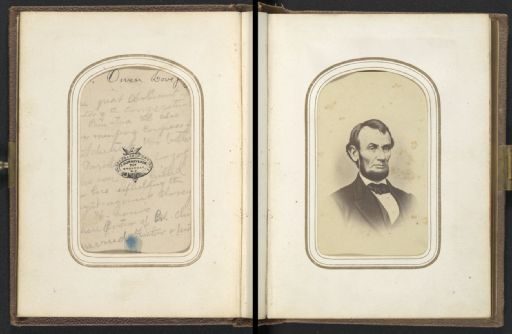
Abolitionist Photograph Album (Digitized Content)
The digitized content of the Abolitionist Photograph Album (Digitized Content) consists of a photograph album depicting numerous white and African American people, including several notable abolitionists, dating to the 1860s-1880s. The bulk of the photographs in the album were created by photographers located in Quincy, Illinois, including Catherine McCormick Reed (1818-1900) (also known as Candance McCormick Reed).
Quincy, Illinois was a hub of early abolitionist activity during the nineteenth century. The city was also home to several photographers, including Catherine McCormick Reed. Catherine began business in 1848, in partnership with her husband Warren A. Reed. After Warren’s death in 1858, Catherine opened a new studio, the Excelsior Gallery, where she would continue to work as a photographer until 1888. Although the compiler of this album is unknown, the photographs contained in this collection reflect Quincy’s heritage as a center of abolitionism.
The digitized content includes digitized versions of twenty-two cartes de visite and tintypes. One postal envelope sent to Sheriff George R. Dyer in Joliet, Illinois from Owen Lovejoy, brother of Elijah Lovejoy, is also present. Photographs of identified abolitionists include Owen Lovejoy, Wendell Phillips, Anna E. Dickenson, and Dr. Reverend J. Ewing Kuykendall. In addition to local persons and abolitionists, photographs of Abraham Lincoln, Tad Lincoln, George Washington, and Martha Washington are present as well.
The Illinois History and Lincoln Collections unit at the University of Illinois Library manages the physical item of the Abolitionist Photograph Album, 1860-1890 (MS 1168). The collection was completely digitized in 2026. For more information, contact an archivist at ihlc@library.illinois.edu.